Overview
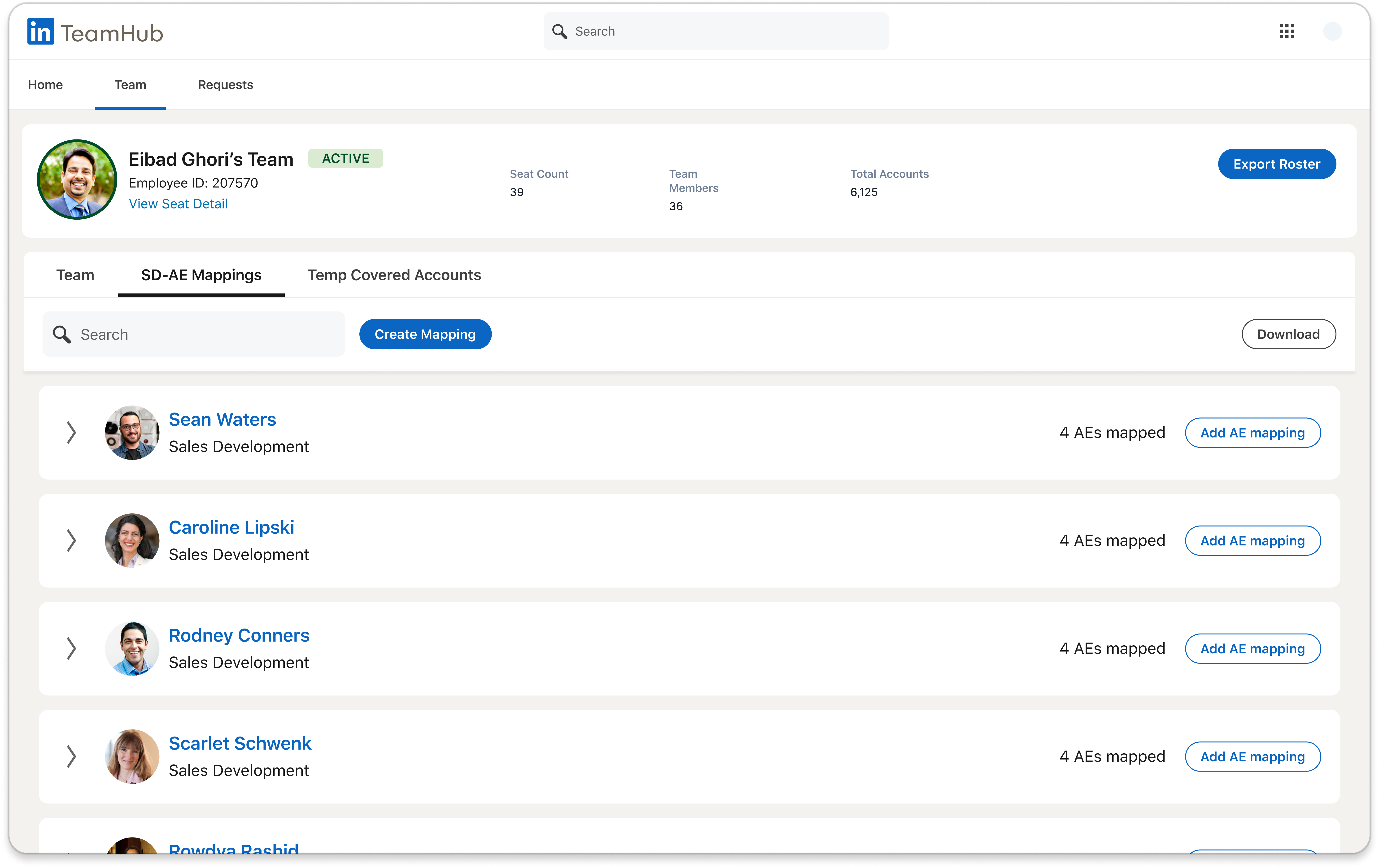
TeamHub is LinkedIn's internal app for sales teams to manage their roster, account assignments, and rep crediting. Part of managing a roster is mapping the relationships between reps and their partner teams, called seat relationships. A Sales Development Rep, for example, might support several Account Executives. Getting those relationships right keeps reps working the same book of business, which lifts selling productivity and keeps account-team data in one place.
The problem
Today these relationships are maintained by a mix of users, Sales Managers, and Sales Operations, and the workflow has three cracks that quietly push the data offline, the one thing TeamHub is built to prevent.
"What also would be great is if I can add new AEs to SDs. It'd be a lot easier if I can do it instead of having ops do it for me."
Sales Development Manager- Manager access: only Ops can view or act on seat relationships inside TeamHub, so managers end up running their mappings offline in spreadsheets.
- Manual workflows: mapping a rep doesn't actually share their book of business, so Ops has to sync accounts by hand through slow, manual steps.
- User awareness: reps aren't told about roster changes or new mappings as they happen, so the people affected are the last to know.
Process
We started from a simple belief: the relationships that shape how a team sells shouldn't be stuck in a manager's private spreadsheet. They belong in TeamHub, where everyone can see and trust them.
Research & framing
We dug into how managers and Ops actually maintain these relationships today, and traced exactly where the work fell off-platform. That made the fix clear: the people who own these relationships needed to manage them where the data already lives.
Explorations
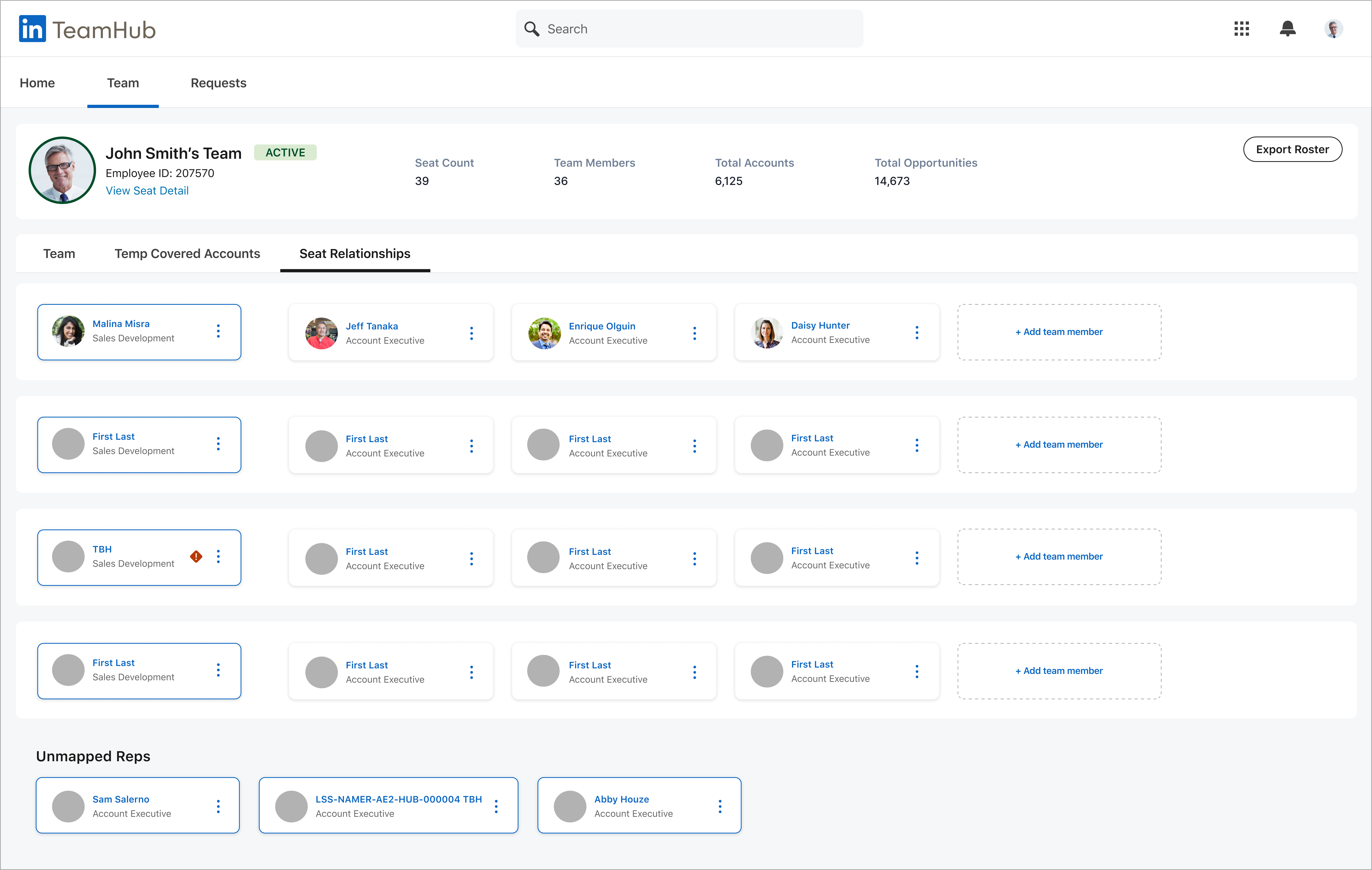
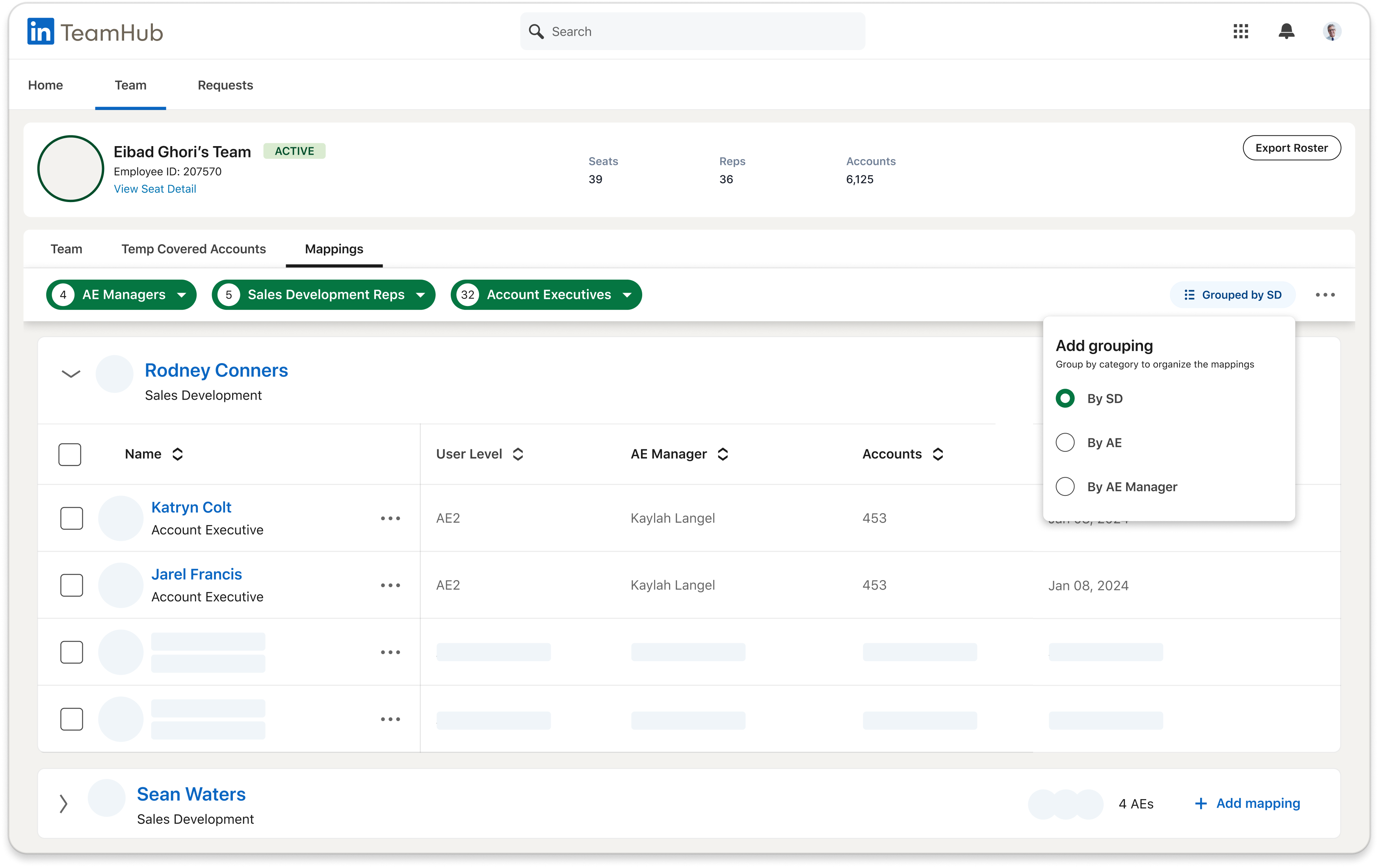
We explored a few ways to make these relationships easy for managers to read and edit, from a card-based roster to a grouped, filterable table.
Key decision
We brought seat relationships fully into TeamHub for the people who own them: managers can map and adjust relationships directly, mapping a rep automatically shares the right book of business, and changes surface to the reps they affect.
Solution
Three ideas carried the design:
Managers, not just Ops
Mapping management opens up to Sales Managers directly in TeamHub, so they can view and adjust seat relationships instead of running them offline.
Map once, share automatically
Mapping a rep to a partner team shares the book of business with them, replacing the manual account syncing Ops used to do by hand.
Changes people can see
Roster changes and new mappings surface across the experience, so reps know who they support and which accounts they cover.
Impact
Reflection
The real win was pulling this work out of spreadsheets and back into TeamHub. Every relationship managed offline was a chance for the roster to drift out of sync. Giving the managers who own these mappings a place to manage them directly keeps the data accurate for everyone who relies on it.